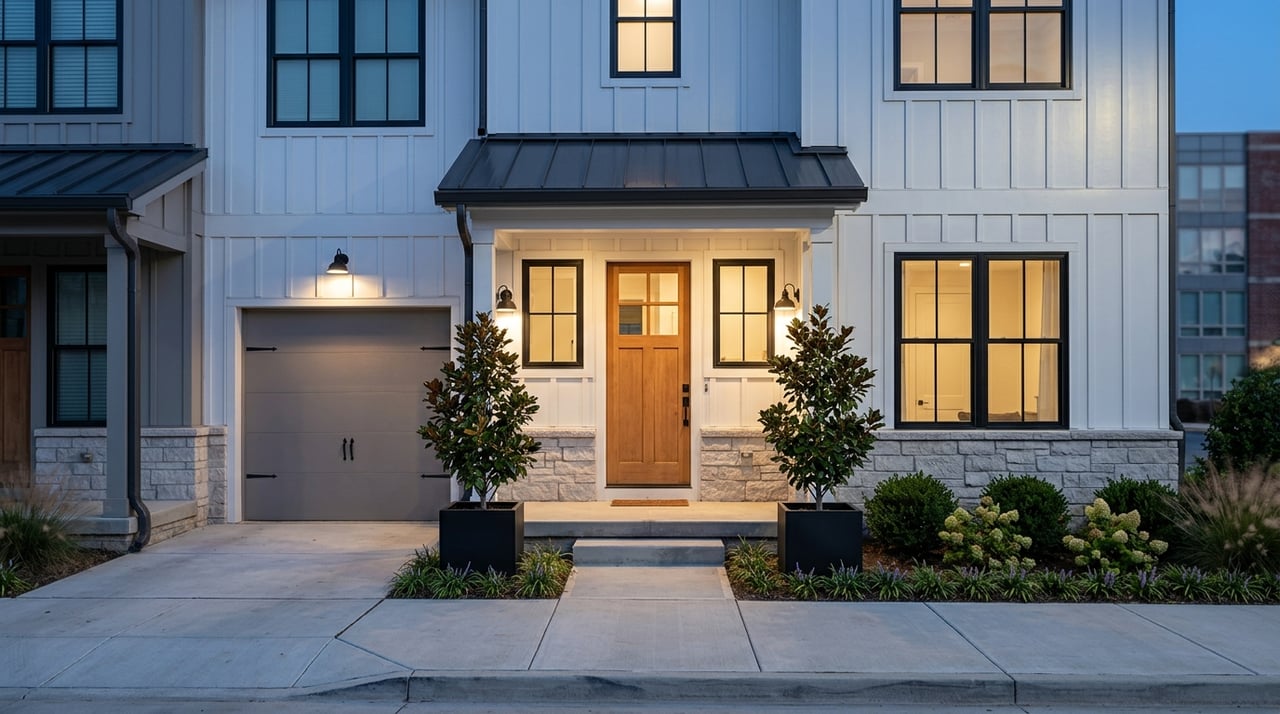
Condo Or Townhome In South End? How To Decide
June 11, 2026
June 11, 2026
Wondering whether a condo or townhome is the smarter move in South End? You are not alone. In this part of Charlotte, the choice often comes down to how you want to live day to day, not just how many bedrooms or square feet you want. If you are weighing walkability, parking, privacy, amenities, and HOA costs, this guide will help you sort through the tradeoffs with more confidence. Let’s dive in.
South End has a distinctly urban feel, and that shapes what buyers value most. The City of Charlotte describes the Blue Line Rail Trail as an 11-mile pedestrian and bicycle facility that connects to 15 bicycle routes and major destinations. In some areas, the city says it sees more than 2,000 users per day.
That level of activity helps explain why South End often feels more connected and walkable than many other Charlotte areas. Charlotte also notes that development rules often require direct connections from nearby buildings to the Rail Trail. For you as a buyer, that means location within South End can matter almost as much as the property type itself.
CATS also says the area between Remount Road and Tremont Drive has grown dramatically since the Blue Line opened in 2007. A new South End Station is planned in that area with improved sidewalks, a new crossing, and an expected opening in 2028. If transit access and a pedestrian-friendly setting are high on your list, that can push the decision toward properties closer to the core.
A condo and a townhome can look similar in photos, but the legal structure is often different. In South End, that distinction affects maintenance, HOA responsibilities, and what you are actually buying.
Under the North Carolina Condominium Act, the association is responsible for maintaining, repairing, and replacing common elements. The unit owner is generally responsible for maintenance, repair, and replacement inside the unit itself. North Carolina law also requires condo associations to keep financial and other records reasonably available to owners and to provide annual financial statements within 75 days after the fiscal year ends.
In practical terms, that often means condo living comes with more shared responsibility and more shared costs. If you want a more lock-and-leave setup, that can be appealing. But you will want to understand exactly what the HOA fee covers.
Many townhomes in Charlotte are governed as planned communities under the North Carolina Planned Community Act. In that setup, the association is generally responsible for common elements, while each lot owner is usually responsible for the lot and improvements on it.
That often creates a more house-like ownership experience. You may have more autonomy, but you may also carry more direct maintenance responsibility. North Carolina law also allows associations to provide statements of unpaid assessments on request and gives them lien and foreclosure rights for unpaid assessments, so reviewing HOA details matters here too.
One of the most important points for South End buyers is simple: do not rely only on marketing language. A home may be described casually in a listing, but the recorded declaration and county records determine whether it is legally a condo, a townhome in a planned community, or something else.
That matters because the ownership structure affects your costs, responsibilities, and resale experience. Before you fall in love with the finishes, make sure you understand the legal framework behind the property.
For many buyers, a South End condo fits best when convenience comes first. If your ideal routine includes walking to restaurants, hopping on light rail, and spending more time out in the neighborhood than maintaining a home, a condo may be the better match.
South End planning documents describe the district as a pedestrian-oriented, transit-focused urban area. Combined with the Rail Trail connections, that creates a strong case for condo living near the heart of the neighborhood.
If your top priority is living close to the Rail Trail, dining, retail, and light rail, condos usually have the edge. Many are built right where South End’s transit-oriented character is most visible.
That does not mean every condo is the same. Floor level, building location, and street orientation can all affect how connected or how busy a home feels. Still, if you want the shortest path to the action, condos often check that box.
Condos in South End often lean into shared amenities that can be hard to find in a townhome setting. Public listing data for The Arlington, for example, shows features such as a fitness center, rooftop pool, and on-site concierge, along with HOA dues of $616 on one listing.
If you value services and shared spaces, that type of setup can feel worth the monthly cost. It is a very different experience from owning a more private, lower-amenity home.
A condo can also work well if you want fewer exterior maintenance tasks on your plate. Because associations typically handle common elements, condo ownership often feels simpler from a day-to-day maintenance standpoint.
That said, simple does not always mean cheap. You should still review reserves, annual financial statements, insurance approach, and any history of special assessments before moving forward.
A townhome often appeals to buyers who want South End access without fully giving up a more traditional home feel. If private entry, garage parking, and a little more separation from shared spaces matter to you, a townhome may be the better fit.
In South End, townhomes can still offer good walkability. But they often trade some immediate proximity to the busiest blocks for more space or more privacy.
Townhomes usually offer a more self-contained lifestyle. You may have multiple levels, more defined living areas, and sometimes private outdoor space that feels more personal than a shared amenity deck.
That can be especially appealing if you work from home, host often, or simply want more room to spread out. It is not just about square footage. It is about how the home lives.
Parking is a real quality-of-life issue in South End. Charlotte’s Park It program manages more than 1,800 metered spaces in Uptown and South End, and the city notes that new development is increasing parking demand in the area.
Because of that, attached garages and assigned parking carry real value. A public example at 205 Lincoln St shows a townhome with a 1-car attached garage and mandatory HOA dues of $263 per month. If easy parking matters to you every day, that kind of feature can heavily influence your decision.
Townhomes often appeal to buyers who want less of a communal living environment. You may still have an HOA, but the day-to-day feel is often more independent than a condo building with shared hallways, elevators, and amenity spaces.
For some buyers, that extra autonomy is the deciding factor. If your priorities are privacy, parking, and a more residential feel, a townhome usually rises to the top.
In this neighborhood, the condo versus townhome decision is really a tradeoff exercise. The right answer depends on which compromises feel easiest for you.
South End is a dense mixed-use district with rail activity, restaurants, retail, and heavy foot traffic. Charlotte’s noise ordinance regulates amplified sound and limits nighttime construction activity, but that does not make every block equally quiet.
CATS also notes that the new South End Station project will involve construction impacts and Rail Trail closures during the buildout. If you are sensitive to noise, pay attention to the specific block, nearby patios, building orientation, and floor level. In South End, that due diligence matters.
Monthly dues can look very different from one property to another. Some condo communities have higher dues because they support elevators, shared amenities, concierge services, or more extensive building systems. Some townhome communities have lower dues, but owners may carry more direct maintenance responsibilities.
The key is not just the amount. It is what you are getting for it, how well the association is funded, and whether future capital needs are already visible.
South End’s resale appeal is closely tied to continued transit investment and the area’s role as a housing and employment center. Planning documents describe South End as one of Charlotte’s most dynamic real estate markets with strong demand for additional housing.
In our experience, the easiest homes to resell are often the ones that reduce friction for future buyers. Useful parking, sensible HOA dues, clear financials, and a functional layout can matter just as much as style.
Before you write an offer on either property type, ask for the documents that explain how the community actually operates. The North Carolina Department of Justice advises buyers to ask whether there is an HOA, get the bylaws and covenants, and read them carefully.
For South End buyers, a smart review should include:
These details can affect your monthly budget, your maintenance responsibilities, and your long-term comfort with the purchase. They are every bit as important as countertops and paint colors.
If your top three priorities are walkability, amenities, and lock-and-leave convenience, a condo is usually the stronger fit in South End. If your top three priorities are garage parking, more private space, and a more house-like feel, a townhome usually makes more sense.
The best choice is the one that fits your real routine. Think about how often you will walk to light rail, how much noise you can tolerate, how important a private entry feels, and whether you want shared amenities or more personal space. Those answers usually point you in the right direction.
If you want help comparing specific South End options, the senior-led team at Mahool Nance Team can help you weigh the details, review the tradeoffs, and narrow in on the right fit for your lifestyle.
Stay up to date on the latest real estate trends.